How to commission a custom typeface
Categories:
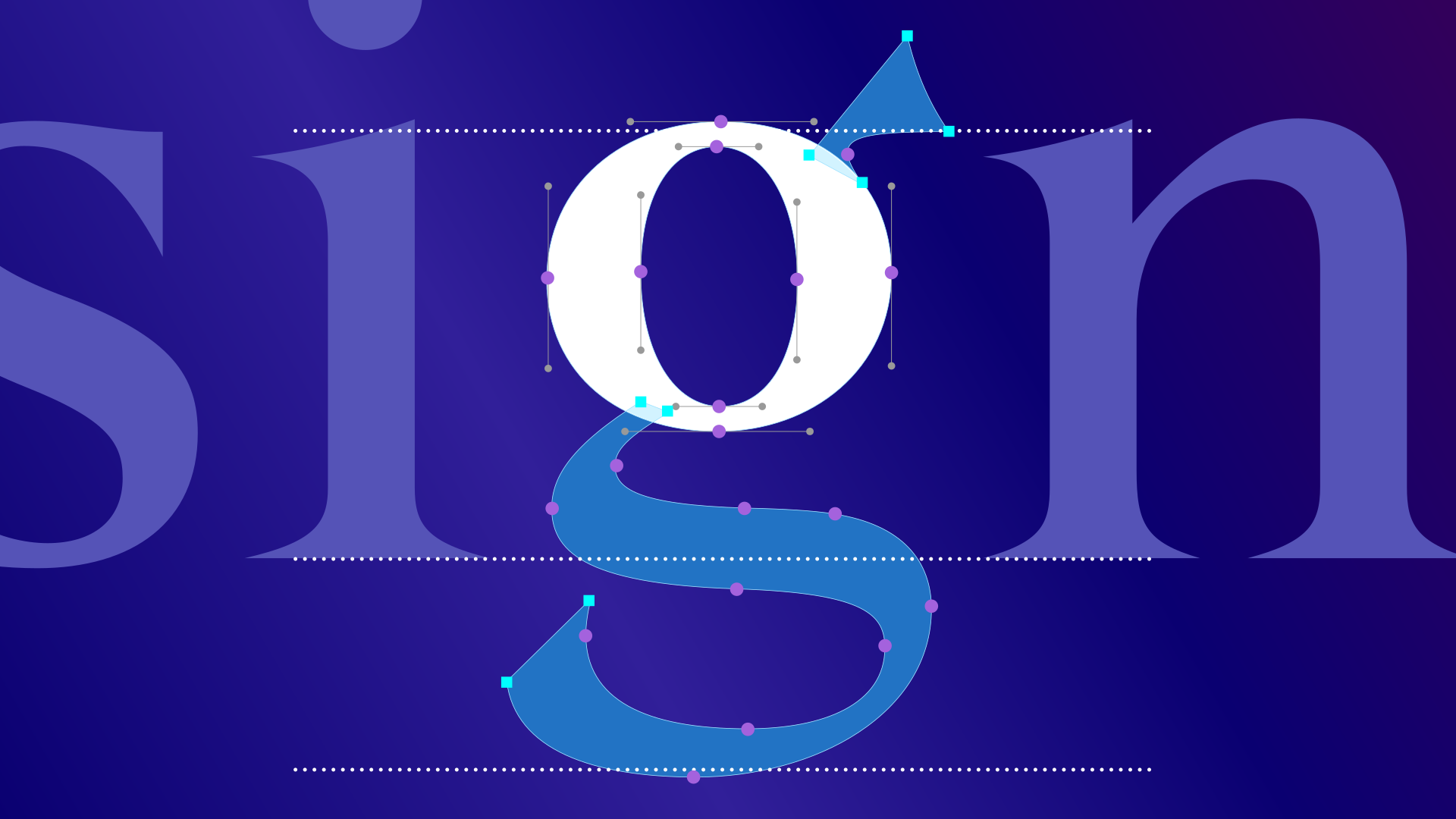

A custom typeface gives your brand its own distinctive voice, consistent typography and freedom from recurring licence fees.
If you’re considering a custom typeface, often as part of a wider branding project, two of the biggest questions are:
- How much does it cost?
- How long does it take?
The answer to both depends squarely on the scope of the project. Here, I’ll break down the main factors in a simple, practical way.
Which languages does it need to support?
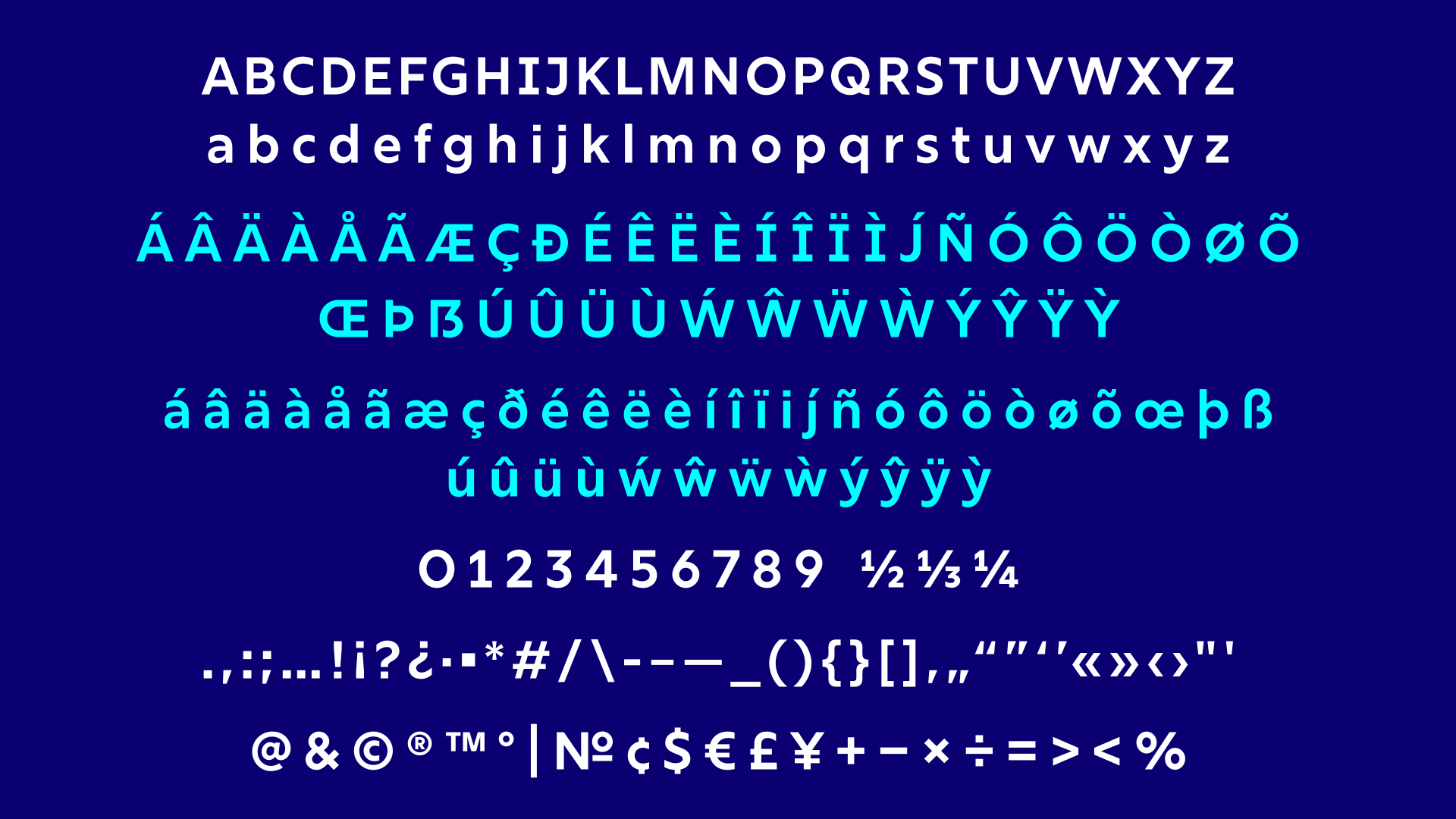
A typeface rarely contains just A–Z. Every character must share the same visual tone of voice and be drawn, spaced, kerned and tested, so the number required has a significant impact on cost and timeline.
A project covering English alone requires a much smaller character set than one covering Western European languages – or 250+ languages written in the Latin script.
A character set may include:
- English A–Z
- Language-specific and accented letters
- Figures and punctuation
- Currency, mathematical and typographic symbols
- Brand-specific characters or icons
Start by considering where your brand operates and who needs to read it. I can recommend a focused character set so you only pay for what you need. Additional languages can be added as your brand grows.
How many styles does it need?
The next factor is styles and weights. A custom typeface might consist of one carefully designed style, a family of weights and perhaps italics.
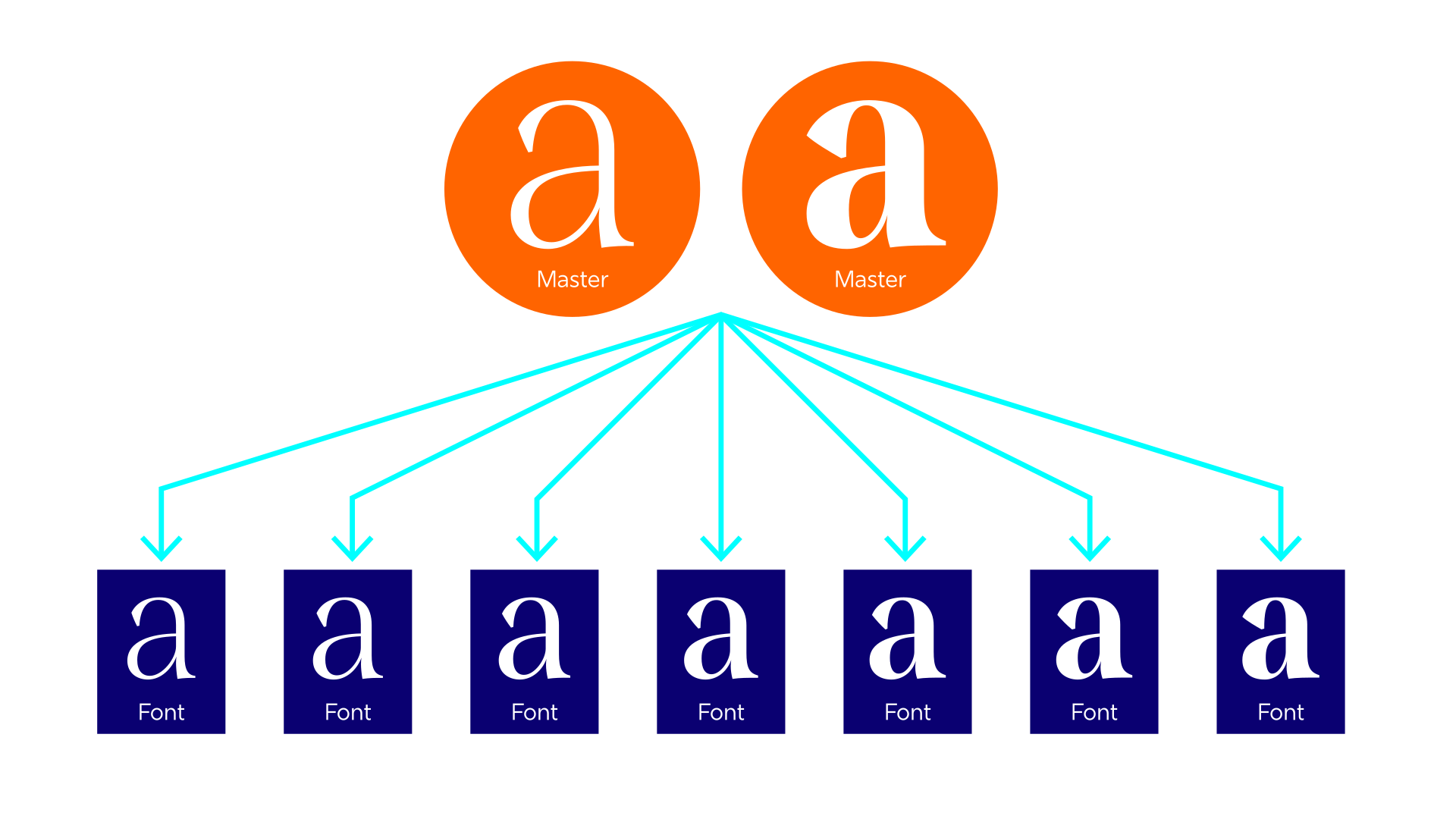
Rather than drawing every weight individually, a family can be created from two versions at opposite ends of the range—for example, Light and Bold. These are called masters. Intermediate weights can then be generated automatically.
A master is a fully drawn version of the typeface, so the number of masters directly affects the cost and timeline. Masters can represent different weights, widths or italics, depending on the styles the typeface needs.
What licence does your brand need?
Custom fonts are typically licensed rather than sold outright. This gives the client the freedom to use the finished fonts while the designer retains ownership of the underlying intellectual property.*
Most clients commissioning a custom typeface want an exclusive, all-media, perpetual licence: the fonts won’t be licensed to another client, and the client’s right to use them anywhere won’t expire.
The design fee covers the work required to create the typeface. The licence fee covers the rights to use it. The licence fee will depend on the size and reach of your organisation, where the fonts will appear and who needs access to them.
*Full IP transfer may be possible, but requires a separate commercial arrangement and careful definition of the rights being transferred. A clear boundary must be maintained between the commissioned fonts and the pre-existing tools, standards and third-party components used to produce them.
Does it need any special features?
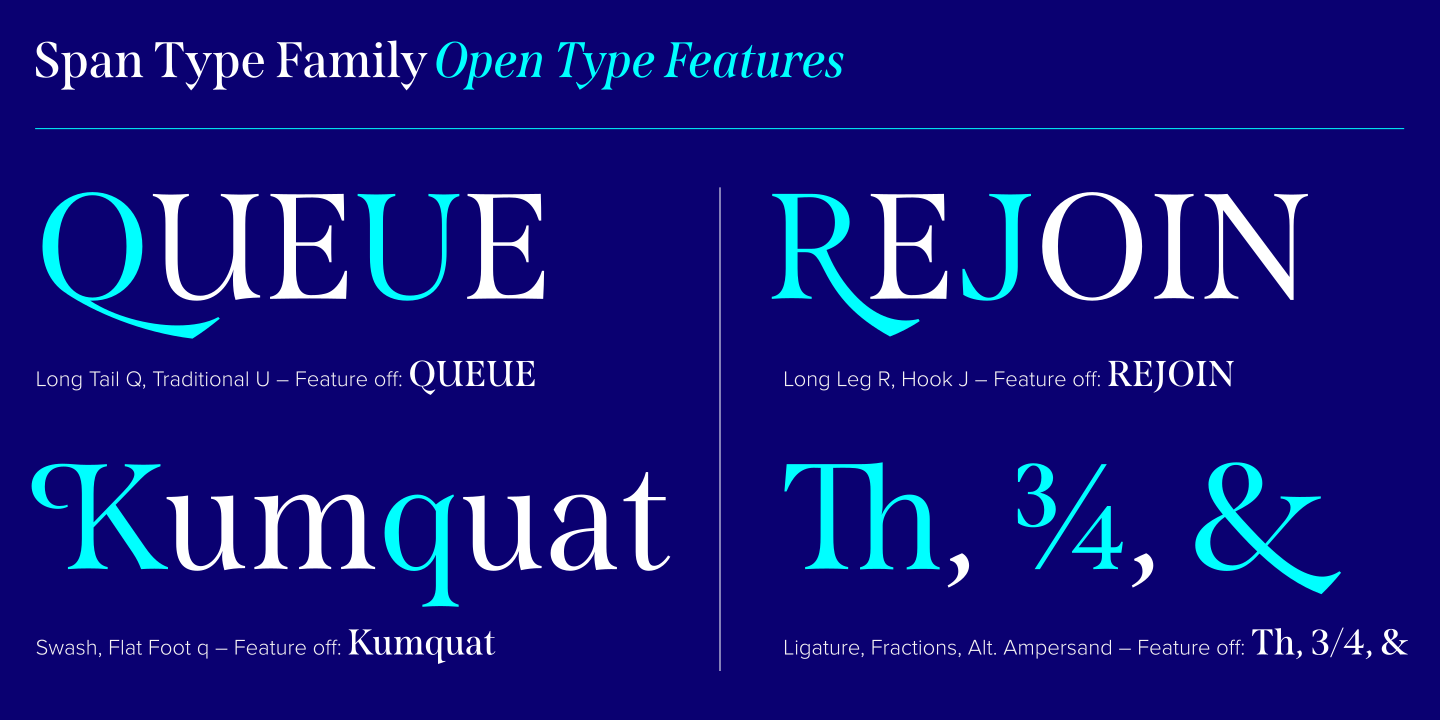
Small caps, alternate characters, ligatures, swashes, tabular figures and other OpenType features can add useful functionality and personality. Each requires additional design, spacing, programming and testing.
Features can be added as your requirements evolve, so I recommend including only those essential for the initial release.
How long does a custom typeface take?
A custom typeface typically takes around 4–12+ weeks, depending on the number of characters, masters and features required. A single display style may sit at the shorter end; a larger family or multilingual typeface will take longer.
The process usually follows six stages:
1. Design analysis
Understanding the brief, brand and creative direction.
2. First words
Exploring the typeface through a carefully chosen set of letters and words.
3. Refinement
Reviewing the initial concepts and refining the chosen direction together.
4. Building the typeface
Expanding the approved design into a complete alphabet and supplying test fonts for evaluation.
5. Character expansion
Adding figures, punctuation, symbols, language support and agreed OpenType features.
6. Final delivery
Completing spacing, kerning, mastering and quality assurance before supplying the production-ready font files.
Prompt feedback and consolidated decisions at each review stage help keep the project moving and the delivery date predictable.
If you’re interested in what happens behind the scenes, I wrote a more detailed guide for Google Fonts on how typefaces are designed and made.
How much does a custom typeface cost?
There is no standard price, but here is how I usually calculate mine.
Adapting one of my existing typefaces, or another typeface you have permission to modify, is the most cost-effective route and can start at around £5,000, depending on the changes required and the licence.
For a fully custom typeface, design fees typically begin at around £10,000–£16,000 for a focused, single-master design with Western European language support. Where the price sits within that range depends largely on the complexity of the design. Connected scripts, custom italics, broader language support and specialist features may require further work. Each additional master typically adds around £8,000.
The licence is quoted separately and reflects the size and reach of the organisation, where the fonts will appear and who needs access to them.
The scope can be adjusted to suit the available budget, with additional styles, languages and features added later if needed.
How do you get started?
You don’t need to arrive with a technical font specification. To understand the project, I’ll usually ask:
1. What’s the brief in a few sentences?
What is the typeface for, and what isn’t working now?
2. Who is it talking to?
Who is your audience, and how should your brand sound to them?
3. How should it feel?
Choose a few words – or describe what it must not feel like. Instinct is often more useful than overthinking it.
4. Where will it live?
Headlines, body text or both? Print, digital or both? Will it appear anywhere unusual, such as very large signage or very small screens?
5. How will you know it’s right?
What would make you say yes – and what would make you say no?
6. What does it need to include?
Consider the styles, weights, languages and special features you might need. If you’re unsure, I can recommend an appropriate starting point.
You don’t need to have every answer. Part of my role is to help define what your brand needs now, what can be added later and the most effective use of your budget.
Considering a custom typeface? I’d love to chat about bringing your next project to life
Language support explained
There is no single universal definition of each language set, so coverage should always be confirmed against the languages your brand actually uses.
Western European
A focused set covering major languages such as English, French, German, Spanish, Italian, Dutch, Portuguese, Danish, Norwegian and Swedish.
Extended or full Latin
A broader character set covering Western, Central and Eastern Europe and potentially more than 250 languages written in the Latin script. Full coverage can require more than 400 characters per master.
Other writing systems
Greek, Cyrillic, Arabic and other writing systems are scoped separately. Where needed, I work with designers and language specialists who have expertise in those scripts.
The best starting point is simply to tell me which languages your brand currently uses and where it expects to operate next. I can translate that into an appropriate character set and cost

Newsletter
Join my newsletter to get the latest on new fonts, updates and behind-the-scenes insights.